

The TOGAF® Standard, 10th Edition, released by The Open Group, represents a pivotal shift in how Enterprise Architecture (EA) frameworks are structured and applied. Transitioning from a rigid, monolithic manual into a flexible, modular ecosystem, TOGAF 10 balances universal, enduring architecture principles with dynamic, topic-specific guidance designed for modern digital practices.
1. The Architectural Shift: From Monolithic to Modular
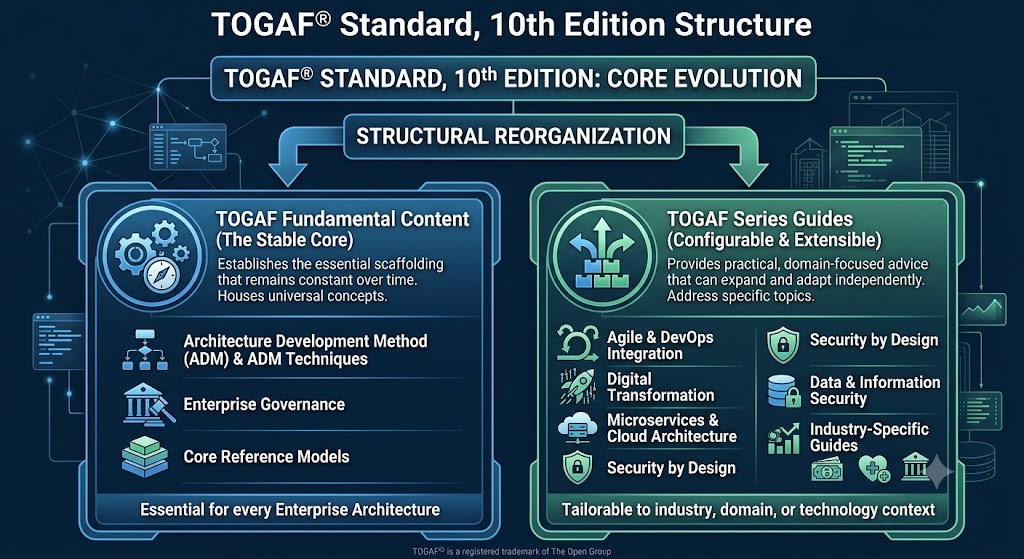
The core evolution of the 10th Edition lies in its structural reorganization into two primary components:
-
TOGAF Fundamental Content (The Stable Core): Establishes the essential scaffolding that remains constant over time. It houses universal concepts, including the Architecture Development Method (ADM), governance frameworks, and core reference models.
-
TOGAF Series Guides (Configurable & Extensible): Provides practical, domain-focused advice that can expand and adapt independently of the core. These guides address specific topics such as Agile EA, DevOps integration, Microservices, Cloud Architecture, Security, and sector-tailored implementation.
2. Integration with Modern Technology & Delivery Models
Unlike earlier versions designed primarily around traditional, sequential IT cycles, TOGAF 10 directly integrates modern paradigms:
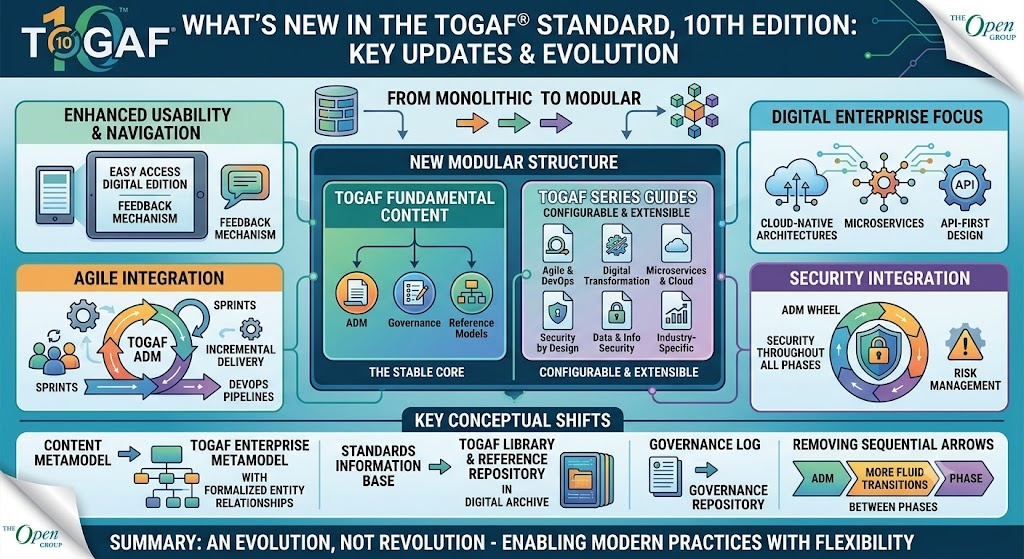
Agile Integration & Incremental Delivery
-
Continuous Flow: Merges the TOGAF ADM with iterative Agile development cycles, DevOps pipelines, and short-term Sprints.
-
Minimum Viable Architecture (MVA): Supports incremental delivery models by enabling architects to define architecture just-in-time rather than upfront in exhaustive detail.
Digital Enterprise Focus
-
Modern Architectural Styles: Dedicated guidance for Cloud-Native Architectures, Microservices Architecture, and API-First Design.
-
Transformation Tooling: Outlines readiness assessment strategies and digital technology roadmaps for modern enterprises.
Security Integration Across the ADM
-
Security by Design: Rather than treating security as a late-stage compliance step or isolated domain, TOGAF 10 embeds security throughout every phase of the ADM wheel.
-
Risk Management Integration: Directly aligns enterprise risk assessment with architectural decisions.
3. Key Conceptual & Terminology Shifts
| Area | Traditional Approach (TOGAF 9.x) | Evolved Approach (TOGAF 10) |
|---|---|---|
| Metamodel | Content Metamodel | TOGAF Enterprise Metamodel with formalized entity relationships. |
| Repository | Standards Information Base | TOGAF Library & Reference Repository in digital archive format. |
| Governance | Static Governance Logs | Dynamic Governance Repository for continuous oversight. |
| Phase Flow | Rigid, sequential arrows between ADM phases | Fluid Transitions emphasizing iterative execution across phases. |
4. Enhanced Usability & Digital-First Experience
-
Easy Access Digital Edition: Optimized for modern digital consumption, allowing architects to navigate, search, and reference materials dynamically across devices.
-
Feedback Mechanism: Implements a direct loop to gather continuous community feedback, ensuring future updates remain aligned with real-world practitioner needs.
Summary: An Evolution, Not a Revolution
TOGAF 10 does not replace the fundamental principles of Enterprise Architecture; instead, it refines and declutters them. By separating universal foundational concepts from fast-evolving domain guidance, TOGAF 10 gives organizations the stability they need for strategy alongside the flexibility required to navigate modern digital transformation.