Moving into user experience design is a significant career pivot. It involves shifting from abstract learning to tangible problem-solving. Many individuals enter this field with strong creative instincts but lack the roadmap to translate those skills into a paid role. This guide outlines the practical steps required to secure a position without relying on hype or shortcuts. Success in this domain depends on demonstrating competence through work, not just promising potential.
The journey from learner to hired professional is not linear. It requires patience, persistence, and a clear understanding of what employers value. This document focuses on the core competencies needed to stand out in a competitive market. It covers portfolio development, networking, interview preparation, and negotiation. By following these strategies, you can build a foundation for a sustainable career in design.
Understanding the Entry-Level Landscape 🌍
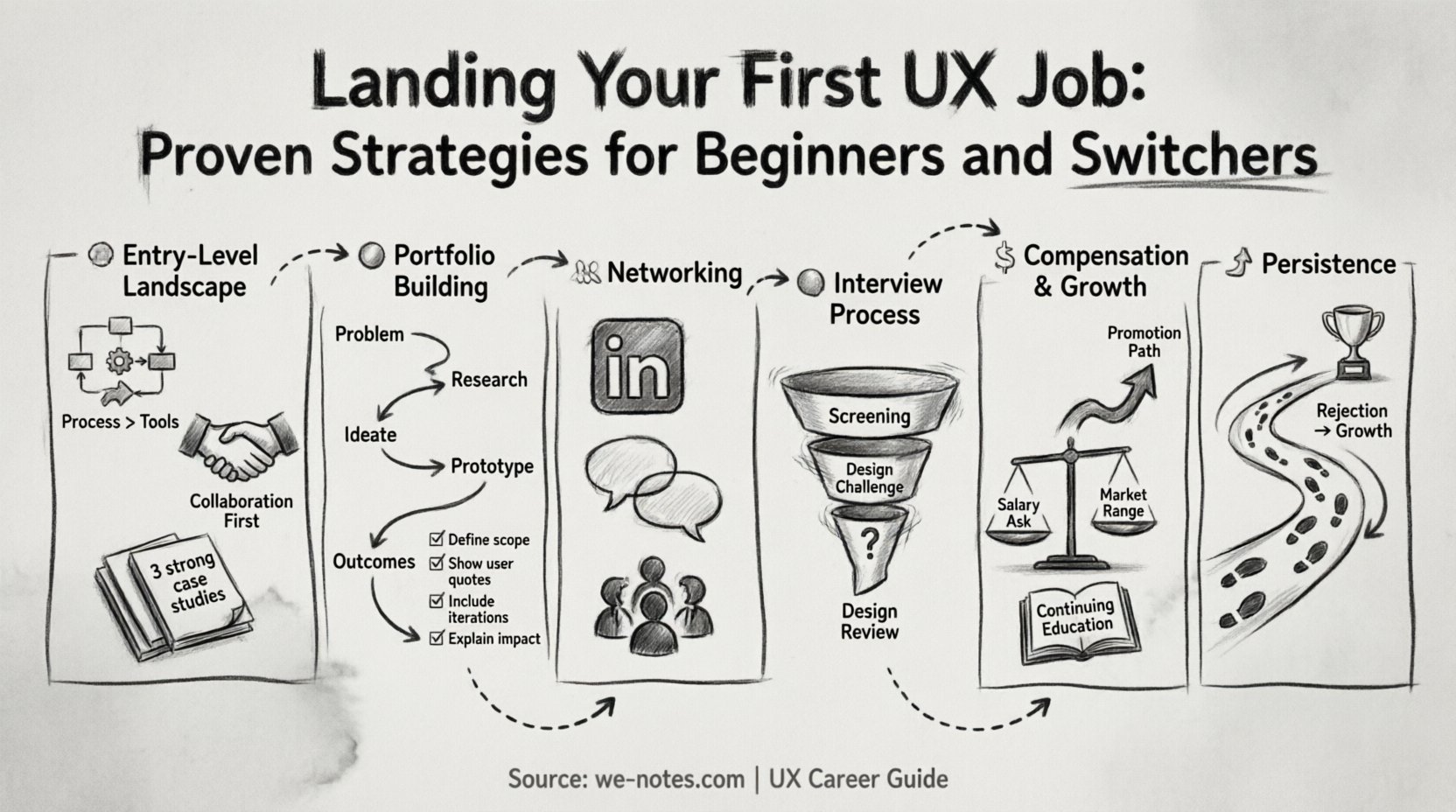
The market for entry-level design roles has changed significantly over the last few years. Companies are no longer looking for individuals who can simply make things look pretty. They need designers who understand business goals, user needs, and technical constraints. Recognizing this shift is the first step in preparing your application.
When reviewing job descriptions, look for specific skills rather than just tool proficiency. Employers want to see evidence of your thinking process. They want to know how you approached a problem, how you gathered information, and how you validated your solutions. This means your preparation must focus on the methodology behind your work.
Key considerations for the current landscape include:
- Shift from Tool-Centric to Process-Centric: Proficiency in a specific interface program is secondary to your ability to research, define problems, and iterate solutions.
- Collaboration is Key: Designers rarely work in isolation. Experience working with developers, product managers, and stakeholders is highly valued.
- Generalist vs. Specialist: Entry-level roles often require a generalist approach. You may need to handle research, wireframing, and high-fidelity prototyping simultaneously.
- Portfolio Quality Over Quantity: Three strong case studies are better than ten shallow projects. Depth demonstrates your ability to see a project through to completion.
Transitioning from another field brings unique advantages. You likely possess domain knowledge that a fresh graduate does not. For example, a background in psychology aids in understanding user behavior. A background in engineering helps in communicating technical feasibility. Leverage your previous experience as a differentiator.
Building a Portfolio That Stands Out 🎨
Your portfolio is your primary asset. It is the proof of your capabilities. It replaces the need for a traditional resume in many initial screenings. A strong portfolio tells a story of how you think and work. It should be easy to navigate and visually clear.
The Structure of a Case Study
Each project in your portfolio should follow a logical narrative. Recruiters often skim portfolios, so clear headings and concise text are essential. A standard case study structure includes the following sections:
- Problem Statement: Clearly define the challenge. What user need was not being met? What business goal was being ignored?
- Research and Discovery: Show how you gathered information. Mention methods used, such as user interviews, surveys, or competitive analysis.
- Define and Ideate: Explain how you synthesized research into actionable insights. Show sketches, user flows, and persona development.
- Prototyping and Testing: Describe the tools used for creating interactive models. Explain how user feedback was collected and integrated.
- Final Solution: Present the high-fidelity designs. Explain the rationale behind key design decisions.
- Outcomes: Share results if available. Did user engagement increase? Did task completion time decrease? If this was a conceptual project, define success metrics.
Portfolio Checklist
| Component | Requirement | Why It Matters |
|---|---|---|
| Project Introduction | One paragraph summary | Grabs attention quickly |
| Visual Assets | High-resolution images | Shows attention to detail |
| Process Documentation | Sketches and notes | Reveals thinking process |
| Reflection | Lessons learned | Shows humility and growth |
| Contact Information | Clear and accessible | Facilitates outreach |
Common Pitfalls to Avoid
Many beginners make the mistake of focusing too much on aesthetics. A beautiful interface that fails to solve a problem is not good design. Avoid showcasing work that lacks context. Do not just post final images; explain the journey that led to them.
Another common error is claiming credit for work that was not yours. If you contributed to a team project, specify your role clearly. Ambiguity can lead to questions during the interview. Honesty about your contributions builds trust.
Ensure your portfolio is accessible. Use high contrast text and ensure images are optimized for speed. A slow-loading site can deter recruiters. Keep the navigation simple. Users should find your work within two clicks.
Strategic Networking and Visibility 🤝
Networking is often misunderstood as collecting business cards or adding strangers on social media. In UX, networking is about building relationships with peers and mentors. It is about becoming a visible part of the design community.
Start by engaging with content creators and thought leaders. Comment thoughtfully on their work. Share insights that add value to the conversation. This establishes you as someone who understands the field.
Building Your Online Presence
LinkedIn remains a critical platform for professional networking. Optimize your profile with keywords relevant to your target role. Your headline should clearly state your focus, such as “UX Designer Seeking Opportunities.”
- Regular Updates: Post about your learning journey. Share screenshots of your work with brief explanations.
- Engagement: Comment on posts from companies you want to work for. Show interest in their products.
- Connections: Connect with recruiters and hiring managers. Send personalized connection requests explaining why you want to connect.
Beyond LinkedIn, consider design-specific communities. Participate in discussions on forums and social platforms. These spaces often share job leads before they hit mainstream job boards.
Offline Networking
Attend local meetups and conferences. These events provide opportunities to meet people face-to-face. Ask questions during talks. Introduce yourself to speakers. The goal is to leave a memorable impression.
Volunteer for design-related events. Helping to organize a workshop or conference puts you in contact with industry leaders. It demonstrates initiative and a willingness to contribute.
Navigating the Interview Process 🗣️
The interview process for design roles can be complex. It often involves multiple stages, from screening calls to deep-dive design challenges. Preparation for each stage is crucial.
Screening Interviews
The first interview is usually with a recruiter. They focus on logistics, salary expectations, and cultural fit. Be honest about your experience level. Do not exaggerate your skills. This stage is about verifying your resume.
Design Challenges
You may be asked to complete a take-home assignment. These vary in complexity. Some ask you to redesign an existing product. Others ask you to solve a specific user problem.
When tackling these challenges, prioritize process over polish. Do not spend weeks on a high-fidelity prototype if the timeline is short. Focus on solving the core problem. Document your decisions. Explain why you chose specific solutions.
Be wary of assignments that ask for significant work without compensation. While some testing is standard, unpaid projects that require full product development are red flags.
The Design Review
This is the most critical part of the process. You will present your work to a team of designers. They will ask probing questions about your choices. They want to see how you handle feedback.
Prepare for the following types of questions:
| Question Category | Example Question | What They Assess |
|---|---|---|
| Process | “How did you decide on this layout?” | Decision-making logic |
| Research | “Who did you talk to?” | User empathy and validation |
| Collaboration | “How did you handle conflict?” | Team dynamics and communication |
| Growth | “What would you do differently?” | Self-awareness and learning |
During the review, listen carefully. Do not become defensive. If a team member points out a flaw, acknowledge it and discuss how you would address it. This shows you are coachable.
Compensation and Career Growth 💸
Negotiating salary is a necessary skill. Do not accept the first offer if it feels low. Research market rates for your location and experience level. Use industry reports to back up your requests.
Consider the total compensation package. This includes health benefits, retirement contributions, and learning budgets. A lower salary with a generous learning stipend might be better for long-term growth.
Long-Term Planning
Your first job sets the trajectory for your career. Look for companies that invest in their employees. Ask about mentorship programs during the interview. A supportive environment accelerates learning.
Set goals for your first year. Focus on mastering the company’s design system. Build relationships with cross-functional partners. Seek feedback regularly. This proactive approach ensures you remain valuable.
Continuing Education
The field of design is constantly evolving. Stay updated with industry trends. Read books on psychology and business. Attend workshops. Continuous learning ensures you remain competitive.
Consider specialized certifications or advanced courses if you wish to pivot into specific areas like interaction design or research. However, practical experience often outweighs certificates in the early stages of a career.
Final Thoughts on Persistence 💪
Securing a role in user experience design takes time. Rejection is a normal part of the process. Do not take it personally. Every “no” brings you closer to a “yes”. Use feedback to improve your portfolio and interview skills.
Stay consistent. Keep building projects. Keep reaching out to people. The right opportunity will come when you are ready. Focus on delivering value in every interaction. Whether it is a portfolio piece or a coffee chat, treat it as a chance to demonstrate your professionalism.
Remember that your background is an asset. Your unique perspective is what the industry needs. Trust in your ability to learn and adapt. The path to a successful career is built step by step. Keep moving forward.