In the complex ecosystem of modern enterprise architecture, aligning human intent with organizational output remains a persistent challenge. The Business Motivation Model (BMM) offers a structured framework to bridge this gap. However, selecting the correct implementation strategy requires a deep understanding of your firm’s unique dynamics. This guide provides a comparative analysis of various approaches to adopting the Business Motivation Model, ensuring your strategic goals resonate throughout the entire organization.
Understanding how to map stakeholder desires to actionable plans is not merely an administrative task; it is a foundational element of sustainable growth. We will examine the core components of the model, evaluate different adoption pathways, and provide a structured comparison to aid your decision-making process. By the end of this analysis, you will possess the clarity needed to structure your firm’s motivation architecture effectively.
🧩 Understanding the Business Motivation Model Landscape
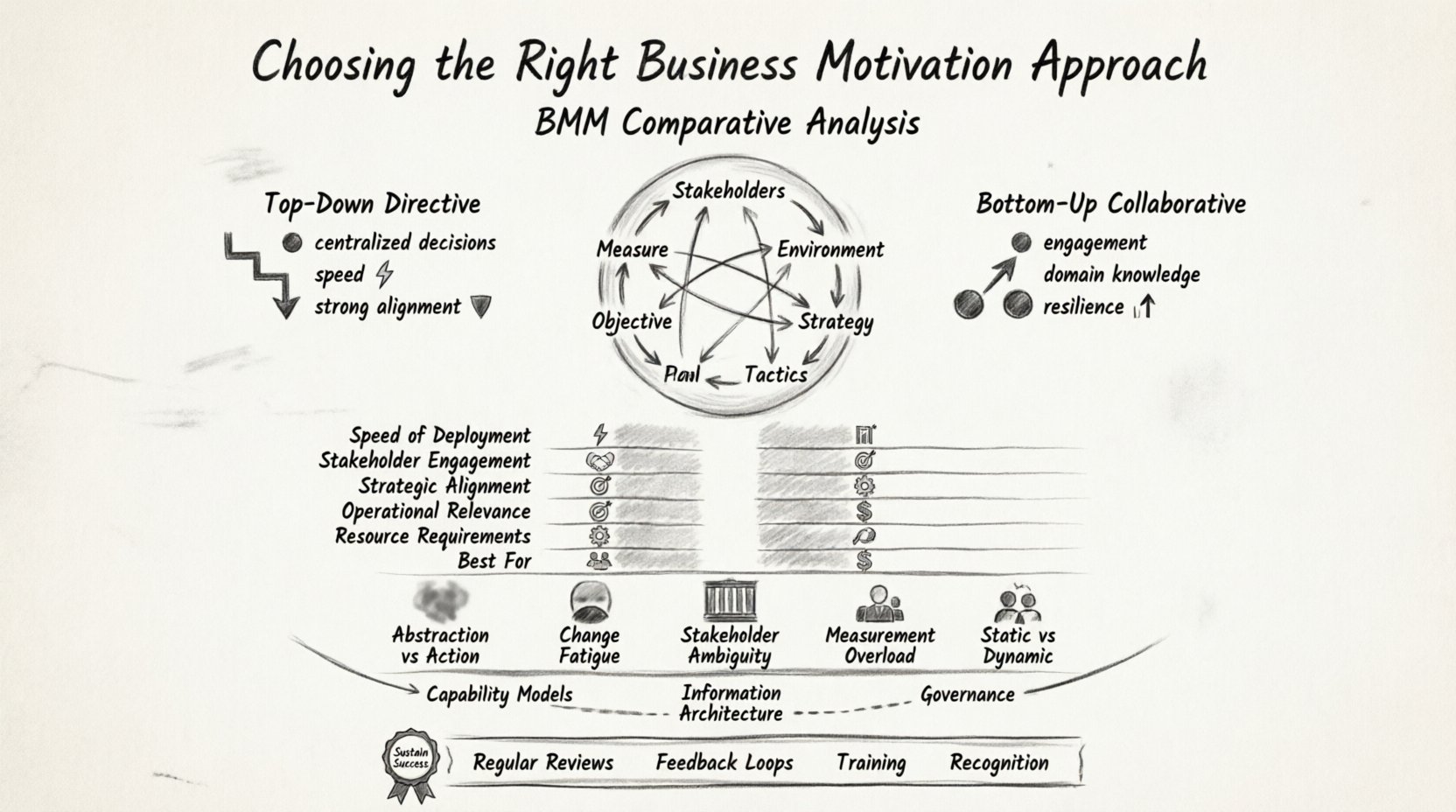
The Business Motivation Model is a conceptual framework designed to describe how an organization motivates its members to achieve specific outcomes. It focuses on the relationships between the “Why” (motivation) and the “What” (execution). To navigate this landscape, we must first identify the fundamental elements that constitute the model.
- Stakeholders: The individuals or groups who have an interest in the enterprise outcomes.
- Environment: The external factors that influence the enterprise, such as market conditions or regulatory requirements.
- Strategy: The high-level plan for achieving long-term goals within the environment.
- Tactics: The specific actions taken to implement the strategy.
- Plan: The detailed schedule and resource allocation for tactics.
- Goal: A desired state that the enterprise wishes to achieve.
- Objective: A quantifiable measure of progress toward a goal.
- Measure: The data point used to determine if an objective has been met.
When implementing this model, firms often struggle with the hierarchy of these elements. A robust approach ensures that every measure traces back to a stakeholder, and every stakeholder influence connects to a strategic goal. Without this traceability, initiatives can become disjointed, leading to wasted resources and confusion.
🔄 Primary Implementation Strategies
There is no single path to success when introducing a motivation model into an existing firm. The choice depends heavily on organizational culture, the maturity of current processes, and the urgency of strategic change. Below, we analyze the two most prevalent approaches: the Top-Down Directive Method and the Bottom-Up Collaborative Method.
1. The Top-Down Directive Method 📉
This approach begins at the executive level. Senior leadership defines the overarching goals and strategic directives, which then cascade down through the management layers to the operational level.
- Key Characteristics:
- Centralized decision-making regarding motivation structures.
- Clear, uniform messaging from the top.
- Rapid deployment across the organization.
- Advantages:
- Ensures alignment with high-level corporate vision.
- Reduces ambiguity in strategic intent.
- Faster initial rollout due to clear authority.
- Disadvantages:
- May overlook ground-level realities and constraints.
- Can lead to resistance if stakeholders feel unheard.
- Risk of creating a culture of compliance rather than engagement.
This method is often suitable for firms undergoing significant restructuring or those operating in highly regulated industries where compliance is paramount. The authority structure is clear, and the path from goal to measure is direct.
2. The Bottom-Up Collaborative Method 📈
In contrast, this strategy invites input from operational teams and individual stakeholders to define the motivations and goals that matter most to them. The model is built from the ground up, aggregating local objectives into broader corporate strategies.
- Key Characteristics:
- Decentralized definition of objectives.
- High level of stakeholder engagement and ownership.
- Iterative refinement of the motivation model.
- Advantages:
- Higher buy-in from the workforce.
- Utilizes deep domain knowledge from frontline staff.
- More resilient to local market fluctuations.
- Disadvantages:
- Time-consuming process to aggregate and align inputs.
- Risk of fragmented goals that lack cohesion.
- Requires strong facilitation to prevent silos.
This approach is ideal for innovation-driven firms where agility and employee creativity are critical competitive advantages. It ensures that the motivation model reflects the actual work being done, rather than an abstract vision.
📊 Evaluating Fit for Your Organization
To assist in your decision-making, we have compiled a comparative table highlighting the differences between these approaches across several critical dimensions. This table serves as a quick reference for evaluating which path aligns best with your current firm capabilities.
| Dimension | Top-Down Approach | Bottom-Up Approach |
|---|---|---|
| Speed of Deployment | Fast ⚡ | Slow 🐢 |
| Stakeholder Engagement | Low 📉 | High 📈 |
| Strategic Alignment | Strong 🛡️ | Variable ⚖️ |
| Operational Relevance | Variable ⚖️ | Strong 🛡️ |
| Resource Requirements | Low (Administrative) 📂 | High (Facilitation) 🤝 |
| Best For | Crisis Management / Regulation 🚨 | Innovation / Culture Change 💡 |
Many firms find that a hybrid approach offers the best balance. This involves setting high-level strategic guardrails from the top while allowing teams the autonomy to define their specific tactics and objectives within those boundaries.
⚠️ Navigating Common Challenges
Regardless of the chosen approach, implementing a Business Motivation Model presents specific hurdles. Recognizing these early allows you to mitigate risks before they impact the success of the initiative.
- Abstraction vs. Action:
One common pitfall is creating a model that is too abstract. If the goals are philosophical and the measures are vague, employees will disengage. Every goal must have a clear, measurable outcome that can be tracked over time.
- Change Fatigue:
Introducing a new framework is often perceived as just another initiative. If the motivation model is not integrated into daily workflows, it will be ignored. It must be visible in the tools and processes people use every day.
- Stakeholder Ambiguity:
Identifying who the stakeholders are can be difficult. Sometimes, the stakeholders are external partners, customers, or regulatory bodies. Failing to map these external influences can lead to a strategy that works internally but fails in the market.
- Measurement Overload:
Collecting data is easy; knowing what to do with it is hard. Firms often define too many measures, diluting focus. Prioritize a few key objectives that truly drive value rather than tracking everything.
- Static vs. Dynamic:
The business environment changes rapidly. A motivation model that is set in stone will become obsolete quickly. The model must be designed for iteration, allowing goals and tactics to shift as conditions change.
🔗 Integrating with Enterprise Architecture
The Business Motivation Model does not exist in a vacuum. It is a critical component of the broader Enterprise Architecture. Integration ensures that the motivation layer informs the capability layer, which in turn drives the technology layer.
1. Alignment with Capability Models
Capabilities represent what an enterprise needs to do to survive and thrive. The motivation model dictates which capabilities are prioritized. If the strategic goal is “Customer Centricity,” the capability model must reflect the ability to respond to customer feedback rapidly. Without this link, capabilities are developed in a vacuum.
2. Connection to Information Architecture
Measures require data. The information architecture must support the collection and reporting of the metrics defined in the motivation model. If the data infrastructure is weak, the motivation model becomes theoretical. Ensure that data governance policies align with the need for transparency and accuracy.
3. Governance and Compliance
For regulated industries, the motivation model must explicitly include compliance goals. These are often non-negotiable. Integrating these requirements into the primary strategy ensures that compliance is treated as a business enabler rather than a hindrance.
🚀 Sustaining Motivation Over Time
Implementation is only the first step. Long-term success depends on maintaining the relevance and accuracy of the model. This requires a commitment to continuous improvement.
- Regular Review Cycles:
Schedule periodic reviews of the goals and measures. Quarterly or semi-annual reviews allow the firm to adjust to market shifts without losing sight of the long-term vision.
- Feedback Loops:
Establish mechanisms for stakeholders to report when a measure is no longer relevant. This feedback ensures the model evolves with the business.
- Training and Education:
New employees need to understand the model. Integrate the concepts into onboarding programs so that the motivation architecture is understood from day one.
- Recognition Systems:
Align reward systems with the defined objectives. If the model says innovation is key, but bonuses are tied only to cost reduction, the model will fail to influence behavior.
🎯 Final Considerations for Strategic Alignment
Choosing the right Business Motivation Model approach is a strategic decision in itself. It defines how your firm thinks about its future and how it engages its people to get there. There is no perfect model, only the model that fits your specific context.
When evaluating your options, consider the following questions:
- What is the current maturity of our strategic planning processes?
- How much autonomy do our teams currently possess?
- Is speed of execution or depth of engagement more critical right now?
- Do we have the data infrastructure to support the measures we envision?
- Are our stakeholders prepared to engage in this level of transparency?
The answers to these questions will guide you toward the appropriate structure. Whether you choose a directive path or a collaborative one, the goal remains the same: creating a clear line of sight between the individual’s daily work and the firm’s ultimate success.
By carefully analyzing your needs and selecting a framework that complements your culture, you can build a motivation architecture that drives performance. The Business Motivation Model is not just a diagram; it is a living system that guides decision-making. Treat it with the respect and attention it requires, and it will provide a stable foundation for your firm’s growth.
Remember that flexibility is key. As your firm evolves, so too must the model. Regularly revisit the assumptions you made during the initial implementation. This ongoing attention ensures that the motivation model remains a relevant and powerful tool for navigating the complexities of the modern business environment.