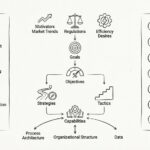


Every organization begins with a vision. Leaders articulate what they want the future to look like, setting targets that promise growth, efficiency, and value. Yet, a significant number of strategic plans remain confined to high-level documents, never translating into the daily actions of teams on the ground. This disconnect often stems from a lack of structured modeling. When you apply a Business Motivation Model, you bridge the gap between abstract ambition and concrete execution.
This guide explores the mechanics of transforming business goals into actionable models. We will examine how to structure requirements, align stakeholders, and maintain a living framework that adapts to change without losing sight of the core mission.
🧩 Understanding the Business Motivation Model
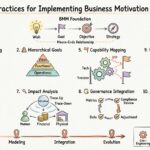
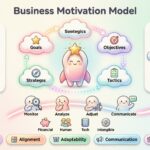
At its core, a Business Motivation Model is a framework used to understand why an organization exists and how it plans to achieve its desired outcomes. It does not merely list tasks; it maps the relationships between intentions, resources, and actions. This approach ensures that every initiative has a clear lineage back to a strategic objective.
Without this structure, initiatives can become siloed. Marketing might run a campaign that does not support the sales target, or IT might develop a system that fails to meet user needs. The model forces a conversation about causality: if we do X, does it help achieve Y?
🔑 Key Components
To build a functional model, you must distinguish between the different layers of organizational intent. These layers often get confused, leading to misaligned efforts.
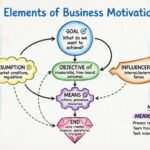
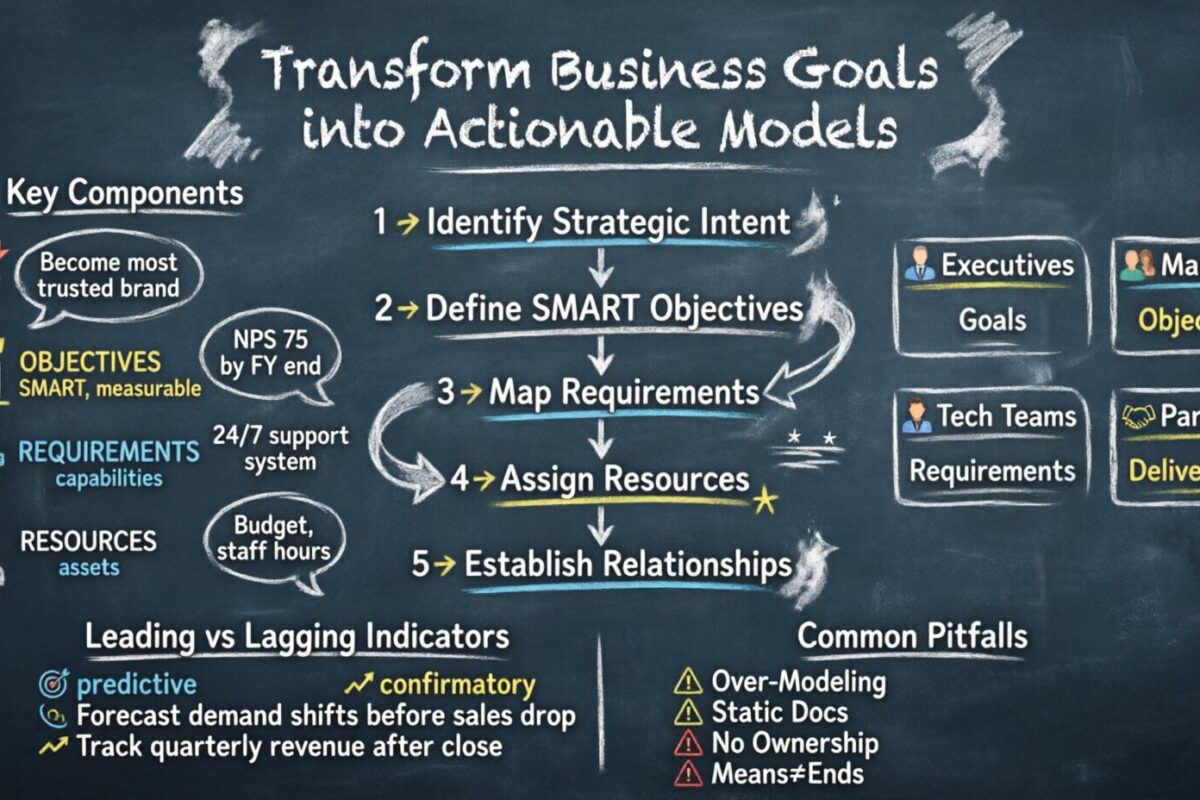
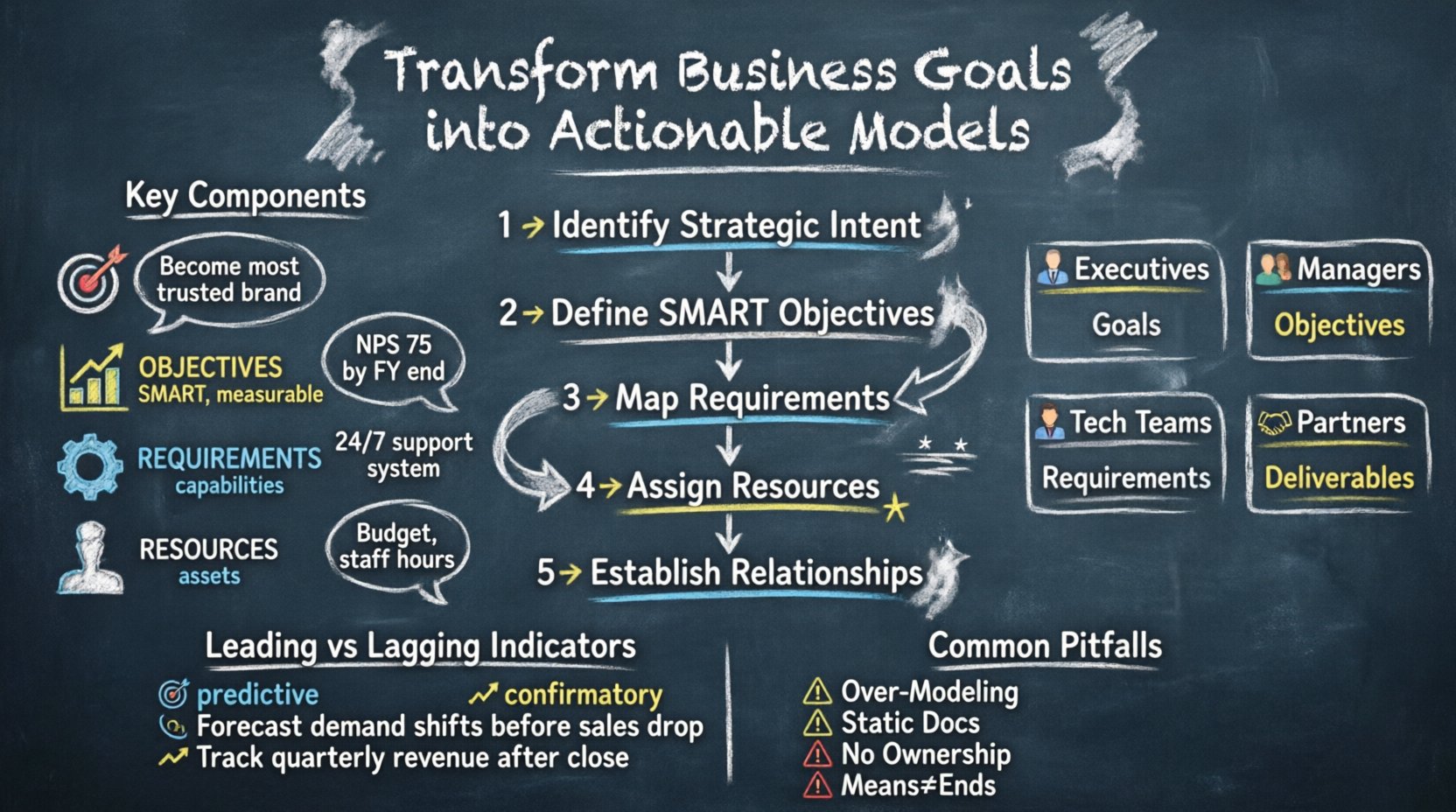
- Goals: These are the high-level aspirations. They are often qualitative and long-term. A goal answers the question: What do we want to achieve?
- Objectives: These are specific, measurable, and time-bound. They answer the question: How will we know we have succeeded?
- Requirements: These define the specific capabilities or constraints needed to meet the objectives. They answer the question: What must be in place to succeed?
Consider a scenario where a company wants to improve customer satisfaction.
- Goal: Become the most trusted brand in the industry.
- Objective: Achieve a Net Promoter Score of 75 by the end of the fiscal year.
- Requirement: Implement a 24/7 support ticketing system with a response time under one hour.
📊 Distinguishing Intentions from Actions
One of the most common errors in planning is treating a requirement as a goal. A requirement is a constraint or a capability. A goal is the desired state. Mixing them up creates confusion in execution.
Use the following table to clarify the distinction during your planning sessions:
| Component | Definition | Example | Time Horizon |
|---|---|---|---|
| Goal | A desired state or outcome | Increase market share | Long-term (1-5 years) |
| Objective | A measurable step toward a goal | Gain 10% new clients in Q3 | Medium-term (Quarterly) |
| Requirement | A condition or capability needed | Launch new CRM module | Short-term (Project phase) |
| Resource | Assets used to fulfill requirements | Budget allocation, Staff hours | Ongoing |
When you maintain this clarity, communication becomes sharper. Stakeholders know exactly what is being measured and what is being built.
🔄 The Process of Transformation
Transforming goals into models is not a one-time event. It is a disciplined process that requires iteration. Follow these steps to establish a robust framework within your organization.
1. Identify Strategic Intent
Start with the leadership team. Conduct workshops to extract the core goals. Do not accept vague statements. Ask for evidence and context. If a leader says they want to “grow,” ask for the definition of growth. Is it revenue, user base, or market penetration?
- Document the primary goals clearly.
- Assign ownership to each goal.
- Ensure goals are mutually exclusive where possible to avoid resource contention.
2. Define Measurable Objectives
Break down each goal into specific objectives. Use the SMART criteria (Specific, Measurable, Achievable, Relevant, Time-bound). This step transforms the abstract into the tangible.
- Set clear thresholds for success.
- Define the data sources for measurement.
- Establish review cycles to track progress.
3. Map Requirements and Constraints
Once objectives are set, determine what is needed to achieve them. This involves identifying technical, financial, and human resource requirements. It also involves identifying constraints, such as budget limits or regulatory compliance.
- List all necessary capabilities.
- Identify dependencies between requirements.
- Highlight any potential risks or blockers.
4. Assign Resources
Resources must be explicitly linked to requirements. If a requirement exists without a resource, it is a liability. If a resource exists without a requirement, it is waste.
- Allocate budget to specific requirement lines.
- Assign personnel to specific work streams.
- Ensure skills match the complexity of the requirement.
5. Establish Relationships
This is the critical modeling step. You must define how the components relate to one another. Use diagrams to visualize the flow from Goal to Resource.
- Map dependencies (e.g., Requirement A must be met before Requirement B).
- Identify conflicts (e.g., Resource X is needed for Goal A and Goal B).
- Clarify satisfaction relationships (e.g., Completing Requirement A satisfies 50% of Objective B).
🤝 Aligning Stakeholders
A model is useless if the people who need to use it do not understand it. Stakeholder alignment is not just about communication; it is about shared mental models.
Identify Stakeholder Groups
- Strategic Leaders: Focus on Goals and high-level Objectives.
- Operational Managers: Focus on Objectives and Requirements.
- Technical Teams: Focus on Requirements and Resources.
- External Partners: Focus on shared Requirements and Deliverables.
Communication Strategies
Different groups need different views of the model.
- For executives, provide a summary view showing the status of Goals.
- For teams, provide a detailed view showing specific Requirements and tasks.
- Use visualizations to make the connections obvious.
- Schedule regular reviews to update the model based on real-world feedback.
When stakeholders see their contribution mapped directly to a goal, engagement increases. They understand the “why” behind their “what”.
⚖️ Handling Conflicts and Dependencies
In any complex organization, goals will compete for resources. A Business Motivation Model helps surface these conflicts early.
Resource Contention
If two goals require the same limited resource, the model must reflect this. You can prioritize goals based on strategic value. This allows leadership to make informed trade-offs rather than guessing.
- Mark resources as shared or exclusive.
- Calculate the impact of shifting resources from one goal to another.
- Establish a governance board to resolve high-level conflicts.
Dependency Management
Sometimes, achieving Goal A requires Goal B to be completed first. This is a dependency. Failing to model this leads to bottlenecks.
- Identify critical paths in the model.
- Set milestone dates for dependency completion.
- Monitor progress closely for tasks on the critical path.
📈 From Model to Metrics
Once the model is built, it drives measurement. The metrics derived from the model should directly reflect the objectives.
Leading vs. Lagging Indicators
- Lagging Indicators: These confirm that an objective has been met (e.g., Revenue). They tell you what happened.
- Leading Indicators: These predict future performance (e.g., Number of sales calls made). They tell you what is likely to happen.
A robust model uses both. Relying only on lagging indicators means you react to problems after they occur. Using leading indicators allows for proactive adjustment.
Feedback Loops
Metrics should feed back into the model. If an objective is consistently missed, the requirement might be flawed. If a goal is consistently exceeded, the strategy might be too conservative. This iterative feedback loop keeps the model relevant.
- Review metrics monthly or quarterly.
- Update the model when data shows a trend.
- Retire goals that are no longer relevant to the business.
🛠️ Common Pitfalls in Implementation
Even with a solid framework, organizations often stumble. Be aware of these common issues.
| Pitfall | Consequence | Mitigation Strategy |
|---|---|---|
| Over-Modeling | The model becomes too complex to manage | Focus on high-impact goals first. |
| Static Documentation | The model becomes outdated quickly | Integrate updates into regular planning cycles. |
| Lack of Ownership | Goals are ignored by teams | Assign clear owners for every goal and requirement. |
| Confusing Means and Ends | Teams focus on tasks instead of outcomes | Regularly reinforce the distinction between requirements and goals. |
🌱 Continuous Improvement
The business environment is dynamic. Regulations change, markets shift, and technology evolves. A Business Motivation Model must be treated as a living artifact, not a static document.
Regular Audits
Schedule periodic audits of the model. Check if the goals are still aligned with the market reality. Check if the resources are still sufficient. This process ensures longevity.
- Conduct an annual strategic review.
- Update objectives based on quarterly performance.
- Refine requirements based on technical debt or new opportunities.
Training and Onboarding
New employees need to understand the model to contribute effectively. Include model training in the onboarding process.
- Explain the hierarchy of goals and objectives.
- Provide access to the visual models.
- Encourage questions about how their role fits the bigger picture.
🔗 Integrating with Existing Frameworks
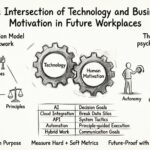
This modeling approach does not need to replace existing methodologies like Agile or Six Sigma. Instead, it sits above them, providing the strategic context.
- Use the model to define the why for Agile sprints.
- Use the model to prioritize backlog items based on goal value.
- Use the model to validate process improvements against strategic needs.
By layering this motivation model over operational frameworks, you ensure that efficiency (doing things right) serves effectiveness (doing the right things).
🏁 Final Thoughts
Transforming business goals into actionable models requires discipline, clarity, and ongoing effort. It demands that leaders move beyond vague aspirations and define the precise mechanics of their strategy. It requires analysts to map the connections between resources and outcomes.
When executed correctly, this approach creates alignment. Everyone understands the destination and the path to get there. Resources are allocated where they matter most. Conflicts are resolved based on strategic value rather than office politics. The organization moves with purpose.
Start small. Model one strategic goal. Map its objectives. Assign its resources. Review the results. Expand from there. The journey from vision to execution is built one model at a time.