

The landscape of modern enterprise management is undergoing a profound transformation. As organizations pivot away from rigid hierarchies, the mechanisms used to drive performance and align strategy are evolving. The intersection of the Business Motivation Model (BMM) and Agile Organizational Structures represents a critical frontier for leaders seeking sustainable growth. This guide explores how traditional motivational frameworks must adapt to support rapid iteration, decentralized decision-making, and continuous value delivery.
🧩 Understanding the Business Motivation Model in a Dynamic Context
At its core, the Business Motivation Model provides a structured way to understand the forces that drive an enterprise. It moves beyond simple financial metrics to encompass the human and strategic elements that fuel success. However, applying this model in an environment characterized by volatility requires a nuanced approach.
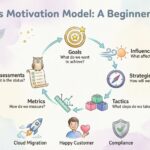
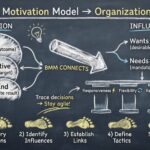
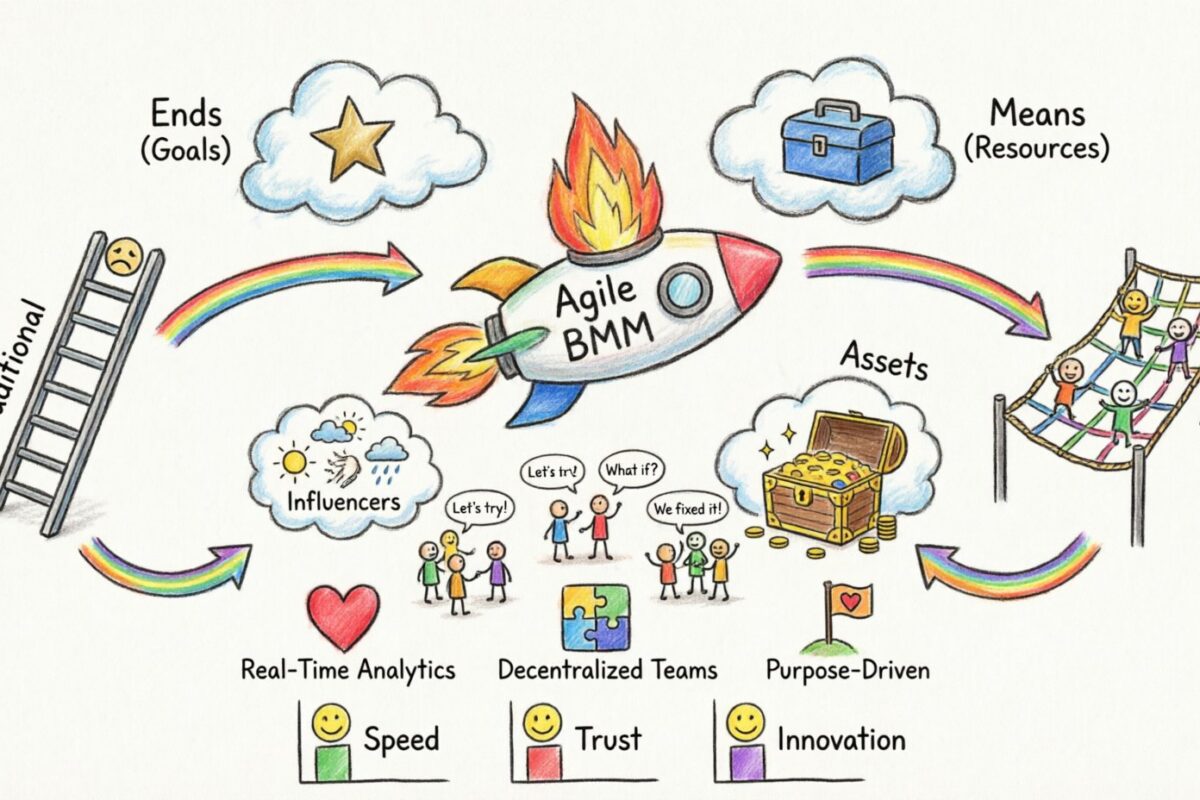
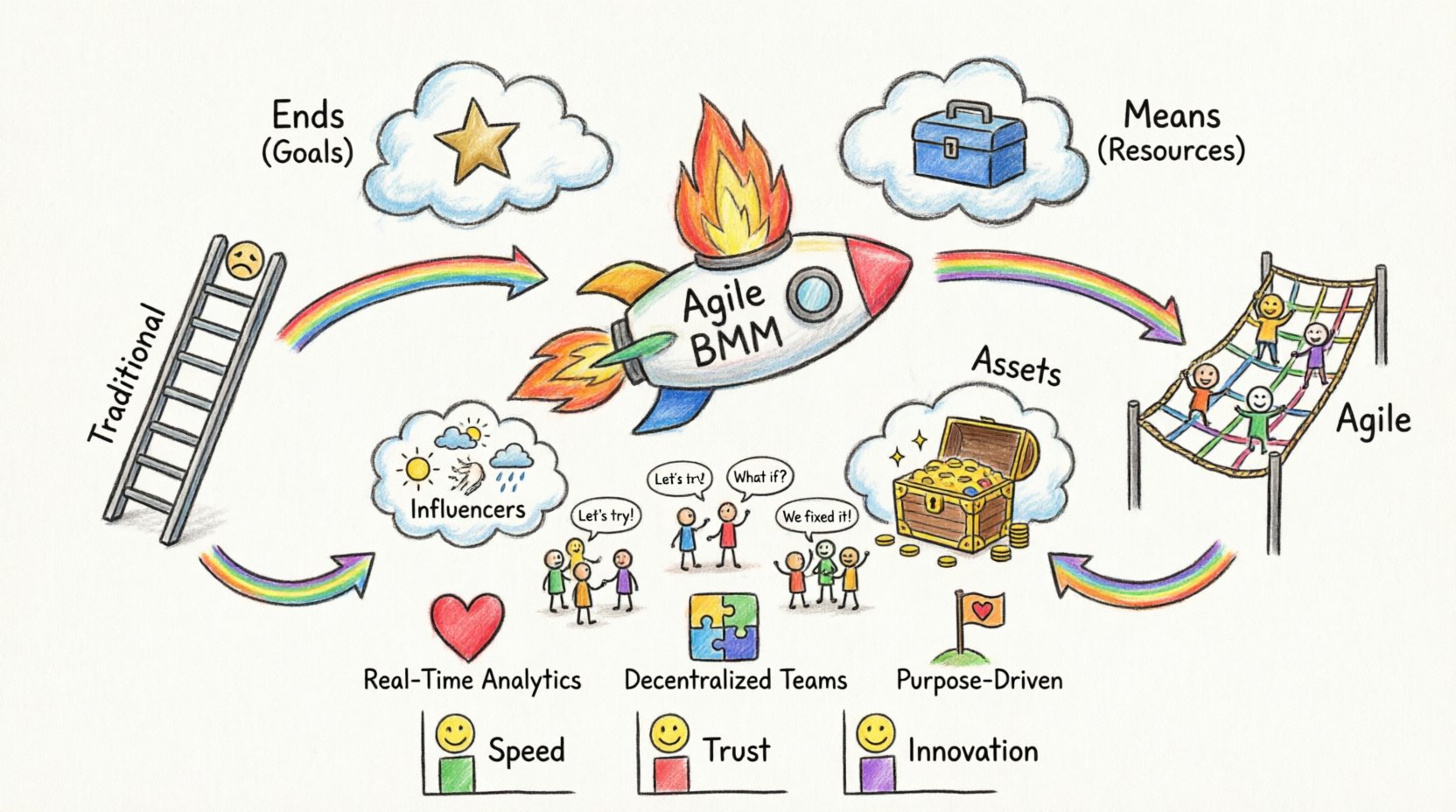
- Ends: These represent the goals and objectives the organization aims to achieve. In an agile setting, these are not static milestones but evolving targets.
- Means: These are the capabilities, resources, and processes deployed to reach the Ends. Agile structures emphasize flexible means over rigid processes.
- Influencers: Factors that impact the relationship between Ends and Means. These can be internal (culture, skills) or external (market trends, regulations).
- Assets: The tangible and intangible resources owned or controlled by the organization.
When integrating these elements into an agile framework, the static nature of traditional BMM diagrams can become a bottleneck. The future lies in treating these components as living data points that update in real-time.
🔄 The Shift from Static Goals to Dynamic Strategic Intent
Traditional organizational models often define strategic intent at the beginning of a fiscal year and expect adherence throughout. Agile organizational structures challenge this by embracing change as a constant. The trend is moving toward Dynamic Strategic Intent, where motivation is derived from the mission rather than a fixed roadmap.
This shift impacts how motivation is modeled:
- Iterative Goal Setting: Instead of annual reviews, goals are revisited in sprints or quarters. Motivation remains high because the targets remain relevant to the current market reality.
- Empowered Teams: Decision-making power is pushed down to the teams closest to the work. This increases ownership and intrinsic motivation.
- Feedback Loops: Data on performance flows back immediately, allowing for rapid adjustment of means to achieve Ends.
📊 Comparing Traditional vs. Agile Motivation Models
To understand the necessary adaptations, it is helpful to contrast the old ways of working with the emerging agile standards. The table below highlights key differences in how motivation is structured and delivered.
| Feature | Traditional BMM Approach | Agile Organizational Approach |
|---|---|---|
| Goal Stability | Fixed for the duration of the planning cycle | Adaptive; reviewed frequently based on feedback |
| Decision Authority | Centralized at the executive level | Decentralized; distributed to cross-functional teams |
| Success Metrics | Output-based (tasks completed) | Outcome-based (value delivered to customers) |
| Communication Flow | Top-down directives | Collaborative and bidirectional |
| Response to Change | Resistance due to planned variance | Embraced as an opportunity for improvement |
🔮 Key Future Trends in Business Motivation
Several distinct trends are shaping how organizations will motivate themselves in the coming years. These trends reflect a deeper integration of technology, psychology, and organizational design.
1. Real-Time Motivation Analytics
Organizations are moving away from annual surveys to continuous pulse checks. By leveraging data analytics, leaders can gauge the morale and engagement levels of their workforce without relying on lagging indicators. This allows for proactive intervention when motivation dips, ensuring that the “Means” of the BMM remain effective.
- Continuous Feedback: Employees provide input on their workload and clarity regularly.
- Data Integration: Performance data is correlated with engagement metrics to identify bottlenecks.
- Transparency: Motivation drivers are visible to all levels of the organization, reducing ambiguity.
2. Decentralized Value Chains
In agile structures, the value chain is often modular. Different teams operate as semi-autonomous units. This requires a motivation model that supports autonomy. The focus shifts from managing individuals to managing ecosystems of teams.
- Team Autonomy: Teams define their own internal processes to meet shared goals.
- Shared Accountability: Success is a collective outcome rather than an individual achievement.
- Resource Fluidity: Assets and capabilities can be re-allocated quickly to support the highest priority Ends.
3. Purpose-Driven Alignment
Modern workers seek meaning in their labor. The Business Motivation Model must explicitly connect daily tasks to a broader purpose. This is not merely about corporate social responsibility but about linking specific business rules to societal or customer value.
- Clarity of Impact: Employees understand how their work influences the customer experience.
- Values Integration: Organizational values are codified into the rules that govern behavior.
- Strategic Narrative: Leaders communicate the “Why” behind the “What” consistently.
🛠 Implementing Agile BMM: Strategic Steps
Adapting the Business Motivation Model to an agile structure requires deliberate action. It is not enough to adopt a new working method; the underlying motivational architecture must be redesigned.
Step 1: Redefine Strategic Intent
Begin by reviewing the “Ends” of your current model. Are they specific enough to guide action, yet flexible enough to allow for pivots? Convert long-term strategic goals into shorter-term objectives that can be validated regularly.
- Break down high-level goals into measurable outcomes.
- Ensure every team understands how their specific output contributes to the strategic intent.
- Establish clear criteria for when an End is considered “achieved” or “complete”.
Step 2: Map Influencers to Feedback Mechanisms
In a traditional model, Influencers are often static risks or opportunities. In an agile context, they become dynamic variables. You must establish mechanisms to track these variables continuously.
- Identify market shifts that could impact your strategic goals.
- Create channels for internal influencers (employee sentiment) to be heard.
- Adjust the “Means” based on changes in these Influencers.
Step 3: Align Governance with Agility
Governance often acts as a friction point in agile transformations. The rules that govern the organization must support speed and innovation while maintaining necessary controls. This involves simplifying approval processes and empowering decision-makers.
- Review existing business rules for unnecessary complexity.
- Delegate authority to the lowest possible level capable of making the decision.
- Focus governance on outcomes and compliance rather than process adherence.
⚠️ Challenges and Mitigations
Transitioning to an agile motivation model is not without obstacles. Leaders must anticipate these challenges and prepare strategies to mitigate them.
Challenge: Ambiguity in Roles
As teams become more autonomous, role definitions can become blurred. This can lead to confusion about who is responsible for specific Ends.
- Mitigation: Clearly define RACI (Responsible, Accountable, Consulted, Informed) matrices for key outcomes.
- Mitigation: Foster a culture of ownership where employees step up when gaps appear.
Challenge: Resistance to Change
Employees accustomed to clear, top-down instructions may struggle with the increased responsibility of agile structures.
- Mitigation: Invest in training that builds decision-making and problem-solving skills.
- Mitigation: Celebrate small wins to build confidence in the new way of working.
Challenge: Data Overload
Real-time analytics can sometimes overwhelm teams with too much information, distracting from the primary Ends.
- Mitigation: Focus on leading indicators that drive behavior rather than lagging indicators that report history.
- Mitigation: Curate dashboards to show only the most critical metrics for each team.
🌐 The Role of Technology in Motivation Models
While software tools are not the solution, the technological infrastructure that supports them is vital. The future of BMM relies on platforms that allow for the mapping of complex relationships between strategy and execution without creating rigidity.
- Visualization: Tools that map the relationship between Ends, Means, and Influencers help teams see the big picture.
- Connectivity: Systems that link strategic goals to daily tasks ensure alignment at every level.
- Scalability: The architecture must support growth, allowing new teams or business units to plug into the existing motivation framework.
👥 Cultural Considerations for Agile Motivation
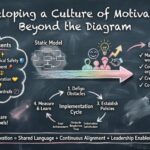
Technology and structure are only half the equation. The culture must support the model. A shift to agile motivation requires a cultural shift toward psychological safety.
- Trust: Leaders must trust teams to manage their own work without micromanagement.
- Failure: Failure is viewed as a learning opportunity rather than a punishable offense.
- Collaboration: Silos are broken down to encourage the sharing of knowledge and resources.
When the culture aligns with the model, motivation becomes self-sustaining. Employees feel a sense of agency and purpose that drives performance more effectively than external rewards alone.
🔍 Metrics for Success in Agile BMM
How do you know if your Business Motivation Model is working within an agile structure? Traditional metrics like revenue or project completion rates are insufficient. You need metrics that reflect adaptability and alignment.
- Strategic Alignment Index: Measures how well team activities correlate with high-level goals.
- Velocity of Change: Tracks how quickly the organization can pivot its means in response to new Influencers.
- Employee Engagement Score: Monitors the psychological state of the workforce over time.
- Value Delivery Rate: Measures the frequency and quality of value delivered to the customer.
🌱 Looking Ahead: The Evolution of Organizational Design
The trajectory of business motivation is clear. As markets become more volatile and customer expectations rise, the ability to adapt becomes the primary competitive advantage. The Business Motivation Model must evolve from a static blueprint into a dynamic operating system.
Organizations that master this transition will find themselves more resilient. They will be able to navigate uncertainty with confidence, driven by a clear understanding of their Ends and the flexibility of their Means. The future belongs to those who can align human motivation with strategic agility.
By focusing on transparency, autonomy, and continuous feedback, leaders can build organizations that are not only efficient but also inspiring. The integration of BMM principles with agile practices is not just a tactical adjustment; it is a strategic necessity for long-term survival in a complex global economy.
📝 Summary of Key Takeaways
- Ends are Dynamic: Strategic goals should be reviewed and adjusted regularly.
- Means are Flexible: Processes and resources must be adaptable to meet changing needs.
- Influencers are Monitored: External and internal factors must be tracked continuously.
- Decentralization Drives Motivation: Empowered teams perform better than managed ones.
- Culture is the Foundation: Structure and tools cannot compensate for a lack of psychological safety.
The path forward requires commitment and continuous learning. By grounding your organizational design in the principles of the Business Motivation Model and adapting them for an agile world, you create a foundation for enduring success.