

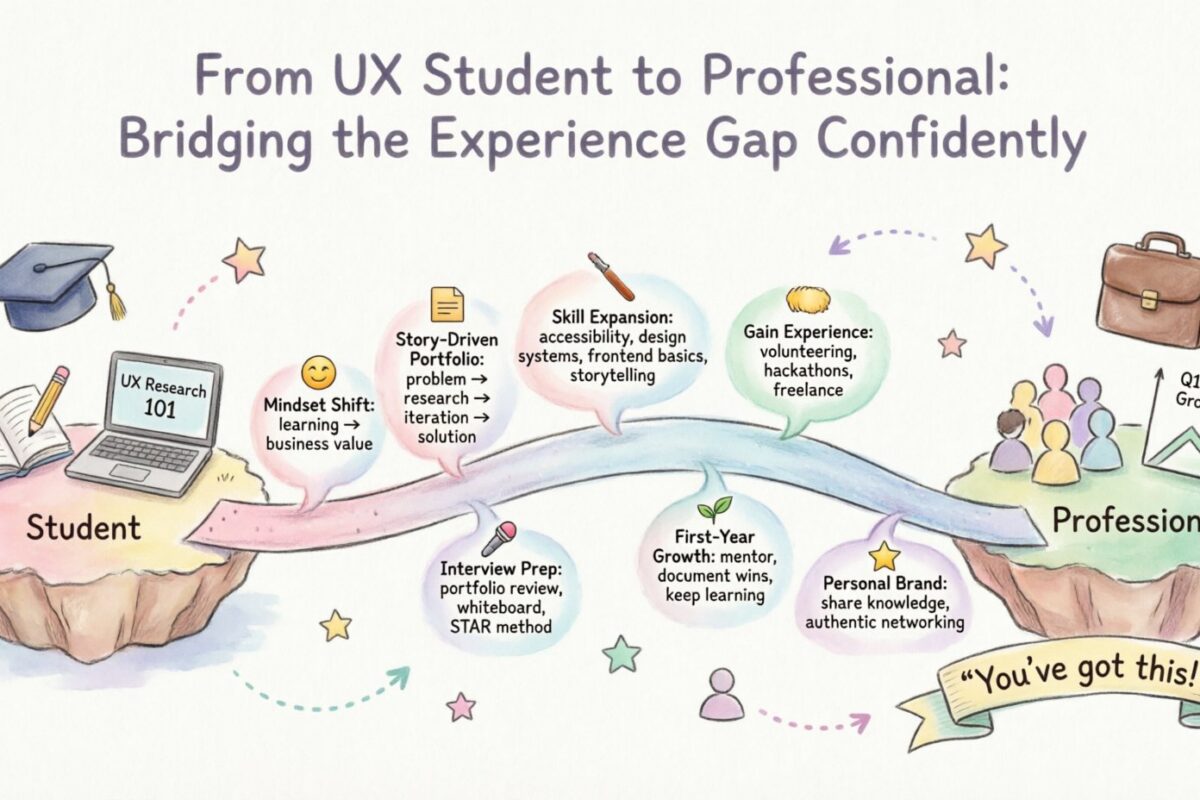
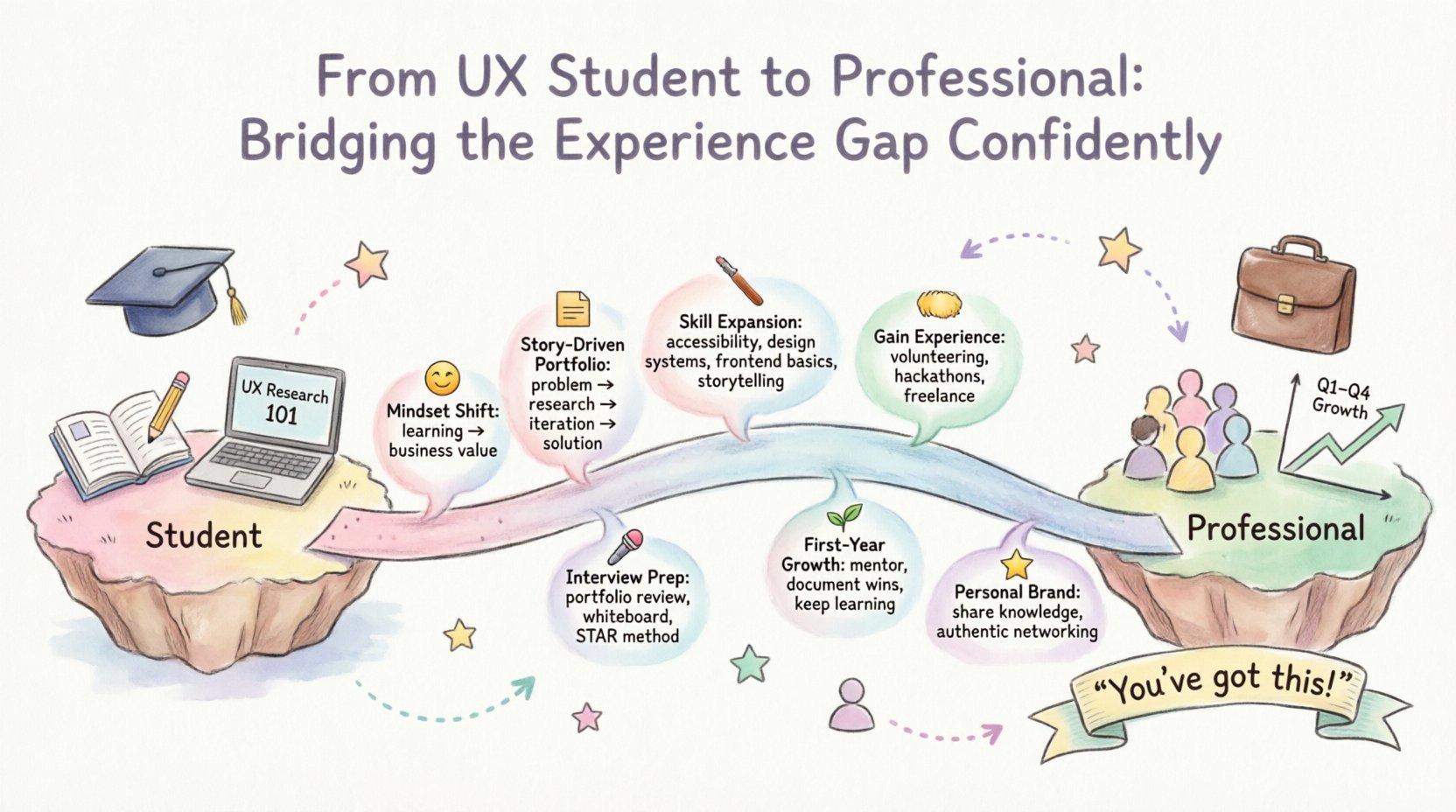
Moving from academic study to a paid role in user experience design represents one of the most significant transitions in a creative career. While bootcamps and university programs provide a strong foundation in theory and methodology, the professional landscape operates under different constraints, expectations, and rhythms. Many designers find themselves stuck in a cycle of applying for jobs only to face rejection due to a lack of practical context. This is often referred to as the “experience gap.”
Bridging this divide requires more than just polishing a resume. It demands a strategic shift in how you present your work, how you approach problem-solving, and how you navigate workplace dynamics. This guide outlines a practical path forward, focusing on actionable steps to transform your potential into a tangible career.
Understanding the Experience Gap 🕳️
The disconnect between student projects and professional deliverables often stems from a difference in scope and stakes. In school, you might design a solution for a theoretical user with no technical constraints or business goals. In the real world, every design decision impacts the bottom line, development resources, and user retention.
Employers are not just looking for someone who can make things look good. They need a problem-solver who understands the ecosystem in which the design lives. To close this gap, you must first recognize the fundamental differences between the two environments.
Student Mindset vs. Professional Mindset
Shifting your perspective is the first step toward confidence. Below is a comparison of the typical attitudes found in education versus the expectations found in industry.
| Aspect | Student Mindset 🎓 | Professional Mindset 💼 |
|---|---|---|
| Primary Goal | Learning concepts & passing grades | Business value & user satisfaction |
| Constraints | Minimal or academic | Time, budget, tech stack, regulations |
| Feedback | From instructors | From stakeholders, devs, and users |
| Deliverable | Final high-fidelity screens | Documentation, rationale, and implementation |
| Collaboration | Often individual work | Highly cross-functional teams |
Curating a Portfolio That Tells a Story 📖
Your portfolio is your primary proof of competence. However, simply displaying screenshots of beautiful interfaces is no longer sufficient. Recruiters and hiring managers spend an average of two to three minutes scanning a portfolio. You need to capture their attention immediately by demonstrating your thinking process.
A strong case study answers the “why” before it answers the “what.” It explains the problem you were solving, the research you conducted, the constraints you faced, and the iterations you made along the way.
Key Components of a Winning Case Study
- The Problem Statement: Clearly define the challenge. Avoid vague statements. Be specific about who the user is and what pain point they face.
- Research & Discovery: Show your work. Include user interviews, competitive audits, or persona creation. This proves you make decisions based on evidence, not intuition.
- Process & Iteration: Do not just show the final result. Display sketches, wireframes, and failed concepts. Explain why you pivoted from one direction to another.
- The Solution: Present the final design with context. Explain how it solves the initial problem.
- Reflection & Outcomes: If possible, mention metrics. If it is a spec project, discuss what you would measure to validate success.
Quality Over Quantity
It is better to have three deep, comprehensive case studies than ten shallow ones. A potential employer wants to see how you handle complexity. Choose projects that demonstrate your ability to navigate ambiguity and collaborate with others.
When describing your tools, focus on functionality rather than brand names. Mention that you use industry-standard prototyping software for interactive mockups or collaboration platforms for stakeholder feedback. This keeps your skills transferable across different organizations.
Expanding Your Skill Set Beyond the Basics 🛠️
While technical proficiency with design software is a baseline requirement, the gap between junior and mid-level designers is often defined by soft skills and strategic thinking. You need to broaden your toolkit to become indispensable.
Hard Skills to Prioritize
- Accessibility: Design for everyone. Understand WCAG guidelines and how to create inclusive experiences.
- Design Systems: Learn how to build and maintain scalable UI libraries. This shows you can work efficiently at scale.
- Basic Front-End Knowledge: Understanding HTML and CSS helps you communicate effectively with developers and ensures your designs are feasible.
- Data Analysis: Learn to interpret analytics. Knowing how to read heatmaps or conversion rates adds a layer of validation to your designs.
Soft Skills That Drive Careers
Hard skills get you the interview; soft skills get you the job and keep you employed. Communication is paramount.
- Storytelling: You must be able to sell your ideas. Present your work with confidence and clarity.
- Receiving Criticism: Feedback can feel personal. Learn to separate your work from your identity. Treat critique as data to improve the product.
- Empathy: You are designing for humans. Listen to users and colleagues alike to understand underlying needs.
- Project Management: Understand deadlines and priorities. Know when to push back and when to compromise.
Gaining Experience Without a Job Offer 🤝
The classic “chicken and egg” problem of needing experience to get a job, but needing a job to get experience, is real. Fortunately, there are several ways to generate real-world experience before being hired.
Volunteer and Pro Bono Work
Non-profit organizations often need help but lack the budget for professional agencies. Offering your services provides real constraints and real users. You will learn how to navigate stakeholder requests and manage a timeline without a paycheck.
Competitions and Hackathons
Participating in design challenges simulates a high-pressure environment. You have to deliver a solution in a short timeframe. This builds resilience and speed.
Redesign Existing Products
Take an app you use daily and identify a friction point. Research why the current flow exists, propose a better solution, and document the rationale. Treat this as a real project. Find a developer friend to help you code a prototype to test your ideas.
Freelancing
Even small, one-off projects count as professional experience. You learn to invoice clients, manage scope creep, and handle deadlines. This business acumen is highly valued.
Navigating the Interview Process 🎤
The interview is a two-way street. You are assessing them just as they are assessing you. Preparation is the key to reducing anxiety.
Common Interview Formats
- Portfolio Review: You will walk the interviewer through your work. Be ready to answer “why” questions repeatedly.
- Whiteboard Challenge: You may be asked to solve a design problem on the spot. Focus on thinking aloud. Show your process rather than rushing to a solution.
- Behavioral Questions: Expect questions about conflict, failure, and teamwork. Use the STAR method (Situation, Task, Action, Result) to structure your answers.
Questions to Ask Them
Asking insightful questions demonstrates your interest and maturity. Consider asking:
- How does the design team collaborate with product and engineering?
- What does the typical design process look like for a new feature?
- How is success measured for this role?
- What are the biggest challenges the design team is facing right now?
The First Year: Survival and Growth 🌱
Landing the job is a milestone, but the first year is critical for long-term success. Many designers burn out or feel imposter syndrome during this period. Here is how to navigate the early months.
Manage Expectations
You will not be able to fix everything immediately. There will be legacy code, unclear requirements, and conflicting opinions. Accept that change is slow. Focus on small wins to build trust.
Find a Mentor
Identify a senior designer within your organization who can guide you. Ask for feedback on your work regularly. Do not wait for a formal review cycle to seek input.
Document Everything
Keep a record of your contributions, feedback received, and problems solved. This will be invaluable for your next performance review and future job searches.
Continue Learning
The field evolves rapidly. Dedicate time each week to reading industry articles, listening to podcasts, or taking advanced courses. Stay curious.
Building a Personal Brand 🌟
Visibility matters. Being known in the community opens doors that applications cannot.
Share Your Knowledge
Write about what you are learning. Post about your design process on social media platforms. Sharing your journey helps others and establishes you as a thoughtful practitioner.
Network Authentically
Attend local meetups or virtual conferences. Connect with peers, not just recruiters. Relationships built on mutual respect often lead to referrals.
Final Thoughts on Career Trajectory 🚀
The transition from student to professional is not a straight line. It involves trial, error, and constant adaptation. There will be moments of doubt. You might feel like you are falling behind peers or that your work is not good enough. This is normal.
Focus on the craft. Focus on the user. Focus on the problem you are solving. The confidence comes from competence, and competence comes from practice. By treating every project as a learning opportunity and maintaining a growth mindset, you will build a resilient career.
Remember, every expert was once a beginner. The gap exists, but it is bridgeable. With the right preparation, a strategic portfolio, and a commitment to continuous improvement, you can step into your professional role with clarity and purpose.
Your journey is just beginning. Take it one step at a time.