


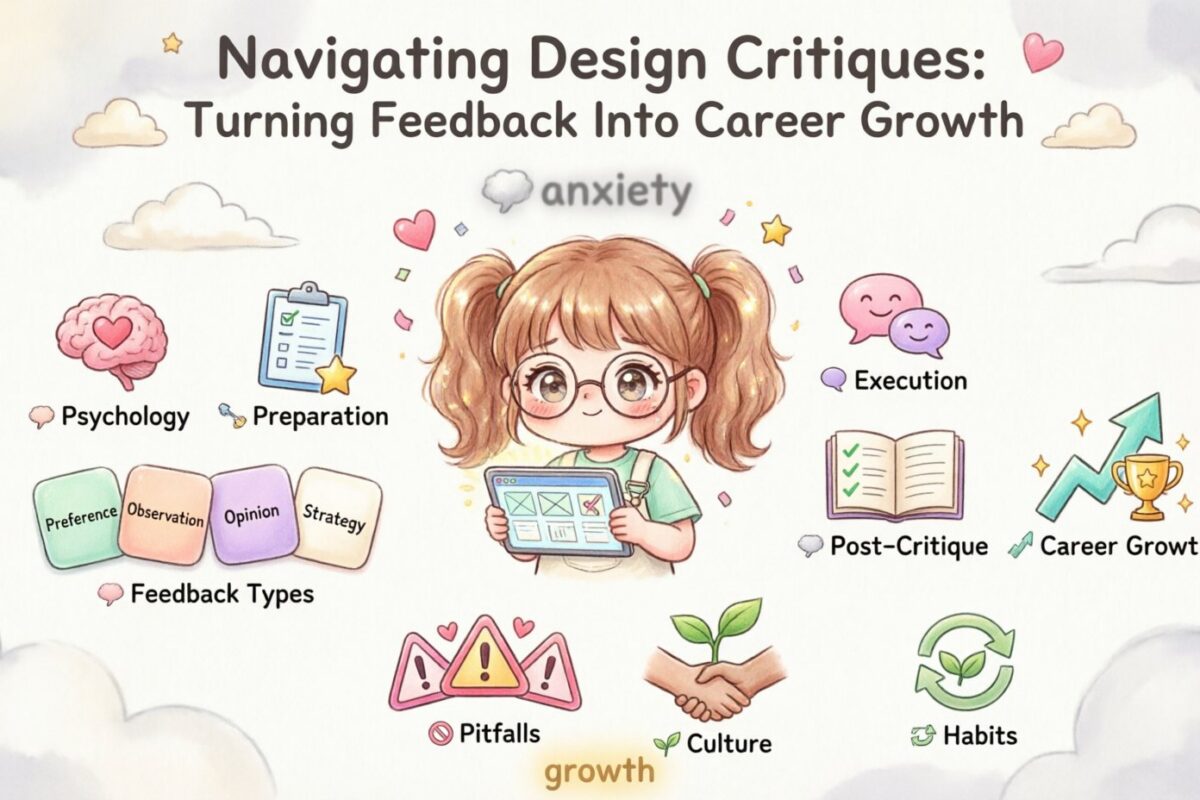
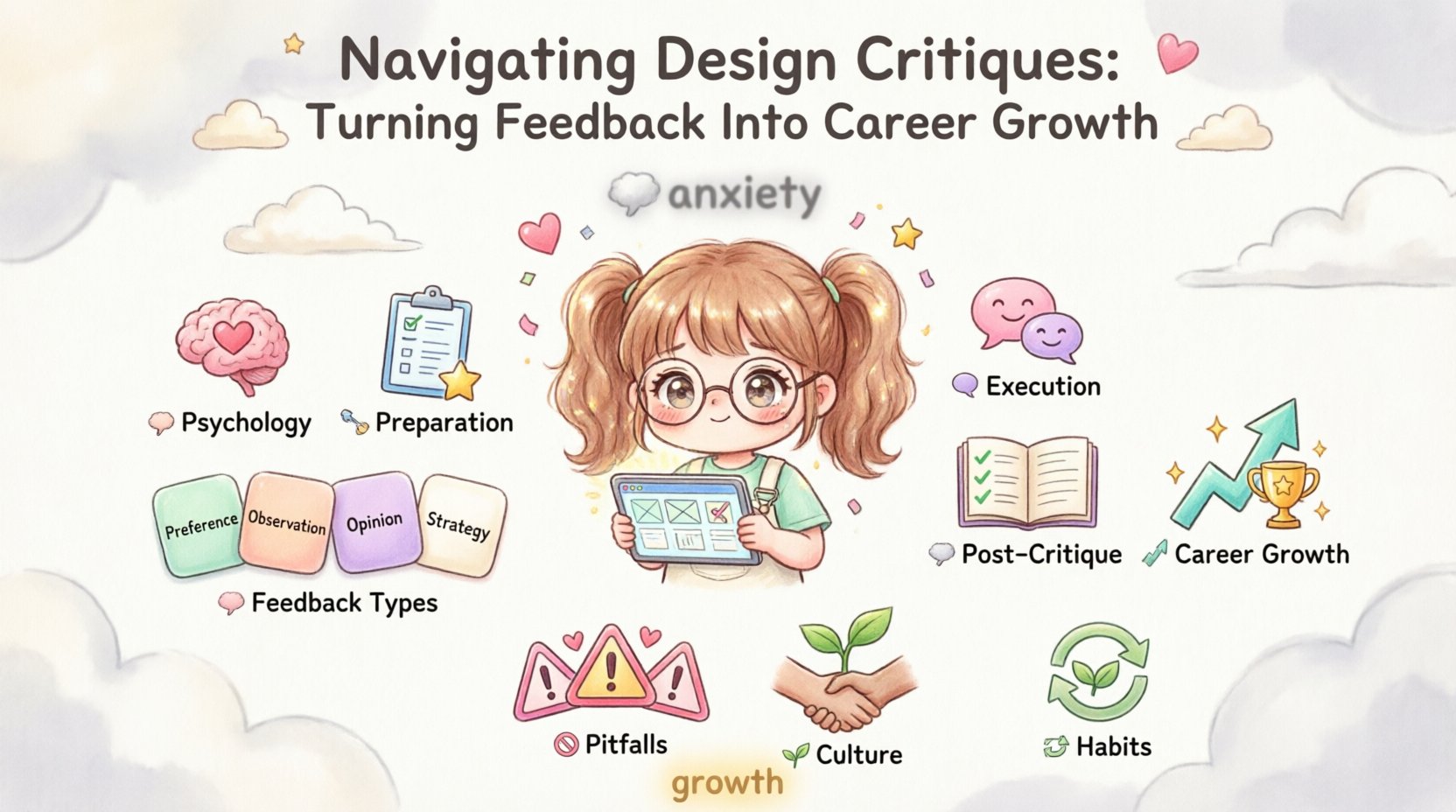
Design critiques are often the most anxiety-inducing moments in a designer’s day. The room goes quiet. The cursor hovers over the screen. Eyes scan the screens or screens are shared. In this space, professional vulnerability meets public scrutiny. However, when approached with the right mindset, design reviews transform from a source of stress into a powerful engine for professional development. This guide explores how to navigate the mechanics of feedback, shifting the focus from defense to evolution.
Understanding the Psychology of Design Reviews 🧠
Before diving into the mechanics of a session, it is vital to address the internal state of the presenter. Critique is rarely about the person; it is about the work. Yet, the human brain often interprets feedback on a project as feedback on identity. This reaction is biological, not professional.
To succeed in this environment, you must reframe the purpose of the meeting. It is not a test of your worth. It is a data collection exercise. Every comment, whether supportive or critical, provides information about how your solution is perceived. This data is essential for building products that actually work for users and stakeholders.
- Separate the Self from the Work: Your design is a hypothesis. Critique tests that hypothesis. If the hypothesis fails, you do not fail. You learn.
- Expect Discomfort: Growth happens outside the comfort zone. Feeling challenged means you are stretching your capabilities.
- Listen for Patterns: One person might dislike a color. If three people do, it is a signal worth investigating.
Preparation: Setting the Stage for Success 🛠️
Most critiques fail before they begin because the context is unclear. A designer often assumes their peers understand the problem space, but stakeholders come from varied backgrounds. Preparation is the first step in controlling the narrative.
Start by defining the goal of the review. Is this a brainstorming session for new ideas? A validation of a specific interaction flow? A review of visual polish? The goal dictates the audience and the questions you ask.
Key Preparation Steps
- Curate the Context: Do not just drop a link. Write a brief summary. What is the problem? Who is the user? What are the constraints?
- Highlight the Unknowns: If there are areas you are unsure about, flag them. This invites specific feedback rather than general opinions.
- Control the Flow: Prepare a walkthrough script. Guide the audience through the story of the solution so they understand the journey, not just the destination.
- Invite the Right People: Ensure the attendees have the authority and expertise to give relevant feedback. Avoid inviting everyone if it dilutes the focus.
Execution: Active Listening and Engagement 🗣️
Once the session starts, your role shifts from creator to listener. This is often the hardest part. The instinct is to explain, justify, or defend. Resist this urge.
When feedback is offered, the immediate reaction might be to say, “Actually, we did that because…”. Pause. Take a breath. Write the comment down. This simple act buys you time to process the emotion and focus on the substance.
Techniques for Effective Engagement
- The Clarification Loop: If feedback is vague, ask for specifics. “Can you tell me more about why that interaction feels confusing?”
- Paraphrasing: Repeat the feedback in your own words to ensure understanding. “So, you are concerned that the navigation is not intuitive for mobile users?”
- Thanking the Contributor: Regardless of the tone, acknowledge the input. It shows respect and encourages future collaboration.
- Managing Time: If the conversation drags on a single point, suggest parking it for a follow-up to keep the session moving.
Categorizing Feedback for Better Analysis 📊
Not all feedback is created equal. Some comments are based on personal preference, while others are rooted in usability principles or business strategy. Sorting these inputs allows you to prioritize effectively.
Use the table below to understand the different types of feedback you might encounter during a design review.
| Type of Feedback | Characteristics | How to Respond |
|---|---|---|
| Preference | “I like blue better than green.” | Check brand guidelines. If no constraint exists, defer to the majority or business needs. |
| Opinion | “This looks too crowded.” | Ask for the metric or goal. Is it about readability? Hierarchy? Space? |
| Observation | “I couldn’t find the button.” | This is actionable. Validate with data or user testing to confirm the friction point. |
| Strategy | “Does this align with our Q3 goals?” | Connect the design to the business objective. Explain the trade-offs made. |
Post-Critique Analysis and Action 📝
The meeting ends, but the work is not done. The value of a critique session lies in what happens immediately after. You must process the feedback and translate it into an action plan.
Do not attempt to fix everything at once. Review the notes and categorize them by impact and effort. High impact, low effort items should be prioritized. High impact, high effort items may require further research or stakeholder alignment.
- Document the Decisions: Create a record of what feedback was accepted and what was declined. If something was declined, note the rationale.
- Communicate Changes: Share a summary with the team. “Based on your feedback, we adjusted the flow to reduce clicks.” This builds trust and shows you listen.
- Follow Up: If a point was ambiguous, schedule a 1:1 to clarify. Do not let questions linger unresolved.
Turning Critique Into Career Growth 📈
Design critiques are more than just product development steps; they are visibility opportunities. How you handle feedback defines your reputation within the organization. A designer who remains calm, listens actively, and implements changes effectively builds a reputation as a reliable partner.
Building Professional Credibility
- Demonstrate Resilience: Handling tough feedback without defensiveness shows emotional intelligence, a key trait for senior roles.
- Showcase Leadership: Facilitate the conversation. Guide the team to consensus. Help others articulate their thoughts clearly.
- Focus on Business Value: Frame your design decisions in terms of business outcomes. This aligns you with leadership goals.
- Iterate Publicly: Show the evolution of the work. When stakeholders see the product improve based on their input, they feel ownership of the success.
Common Pitfalls to Avoid 🚫
Even experienced designers fall into traps during reviews. Being aware of these common mistakes can help you navigate critiques with greater confidence.
- Over-explaining: Spending too much time justifying your choices can look defensive. Trust your design process.
- Ignoring the Silent Ones: Not everyone speaks up in a group. Check in with quieter team members who may have valuable insights.
- Taking Critique Personally: Remember that the critique is on the work, not your character. Detach your ego from the output.
- Focusing Only on Visuals: Don’t let the review devolve into a discussion about font sizes or colors if the core flow is broken. Prioritize structure over style.
- Asking for Validation: Do not ask, “Is this okay?”. Instead, ask, “What are the risks with this approach?” This invites deeper thinking.
Handling Specific Scenarios 🛡️
Sometimes feedback comes in unexpected forms. Here is how to handle specific, challenging scenarios that often arise in design reviews.
When Feedback is Vague
Comments like “make it pop” or “it feels off” are unhelpful if taken literally. They indicate a gut reaction rather than a structural issue. Ask for the specific pain point.
- Ask: “What specific element is causing that feeling?”
- Offer Options: “Would you prefer more white space, or a different color hierarchy?”
When Feedback Conflicts
One stakeholder might want speed, while another wants detail. This is a product strategy issue, not just a design issue. Facilitate a discussion between the stakeholders rather than trying to solve the conflict alone.
- Identify the Goal: What is the primary objective for this release?
- Present Trade-offs: Show how one choice impacts the other. Let the decision-makers choose the priority.
When Critique is Hostile
Occasionally, feedback crosses the line into unprofessionalism. Maintain your composure. Do not retaliate. State the facts of the design decision and move on.
- Stay Calm: Emotions are contagious. Your calmness can de-escalate the room.
- Focus on Data: Revisit user research or business requirements to ground the discussion in reality.
- Private Follow-up: If the behavior persists, address it in a private conversation later.
Developing a Feedback Culture 🌱
While you cannot control the entire organization, you can influence the culture around you. By modeling constructive behavior, you encourage others to do the same. This creates a safer environment for the whole team.
- Start with Strengths: When giving feedback, acknowledge what works well before suggesting changes. It balances the conversation.
- Use ‘We’ Language: Frame challenges as shared problems. “How can we solve this?” instead of “You need to fix this.”
- Encourage Questions: Invite the presenter to ask questions. This shifts the dynamic from judgment to collaboration.
- Normalize Iteration: Remind the team that design is a process of refinement. The first draft is rarely the final draft.
Long-term Habits for Continuous Improvement 🔄
Growth is not a one-time event. It is a habit. To truly leverage design critiques for career advancement, you must build systems for continuous learning.
- Maintain a Feedback Log: Keep a personal record of critiques and how you responded. Review it quarterly to spot recurring themes in your work.
- Seek Diverse Perspectives: Don’t just rely on your immediate team. Share work with designers from other disciplines or industries to get fresh angles.
- Reflect on Outcomes: After implementation, check the metrics. Did the change improve the user experience? This closes the loop and validates your learning.
- Teach Others: When you master a concept, share it. Teaching solidifies your own understanding and positions you as a resource.
Final Thoughts on Professional Evolution 💡
The journey from junior to senior designer is often paved by how one handles uncertainty and feedback. Design critiques are the crucible where raw ideas are forged into polished solutions. By approaching them with curiosity rather than fear, you turn every session into a stepping stone.
Remember that your career is not defined by a single project or a single review. It is defined by your consistency in learning, adapting, and delivering value. Embrace the feedback, document the learnings, and keep moving forward. The design field is vast, and there is always more to discover. Your ability to navigate the social and technical aspects of critique will distinguish you in the field.
Start applying these strategies in your next review. Notice how the dynamic shifts when you stop defending and start listening. The growth is in the gap between your intention and the perception of others. Bridge that gap with clarity, empathy, and action.